3 min read
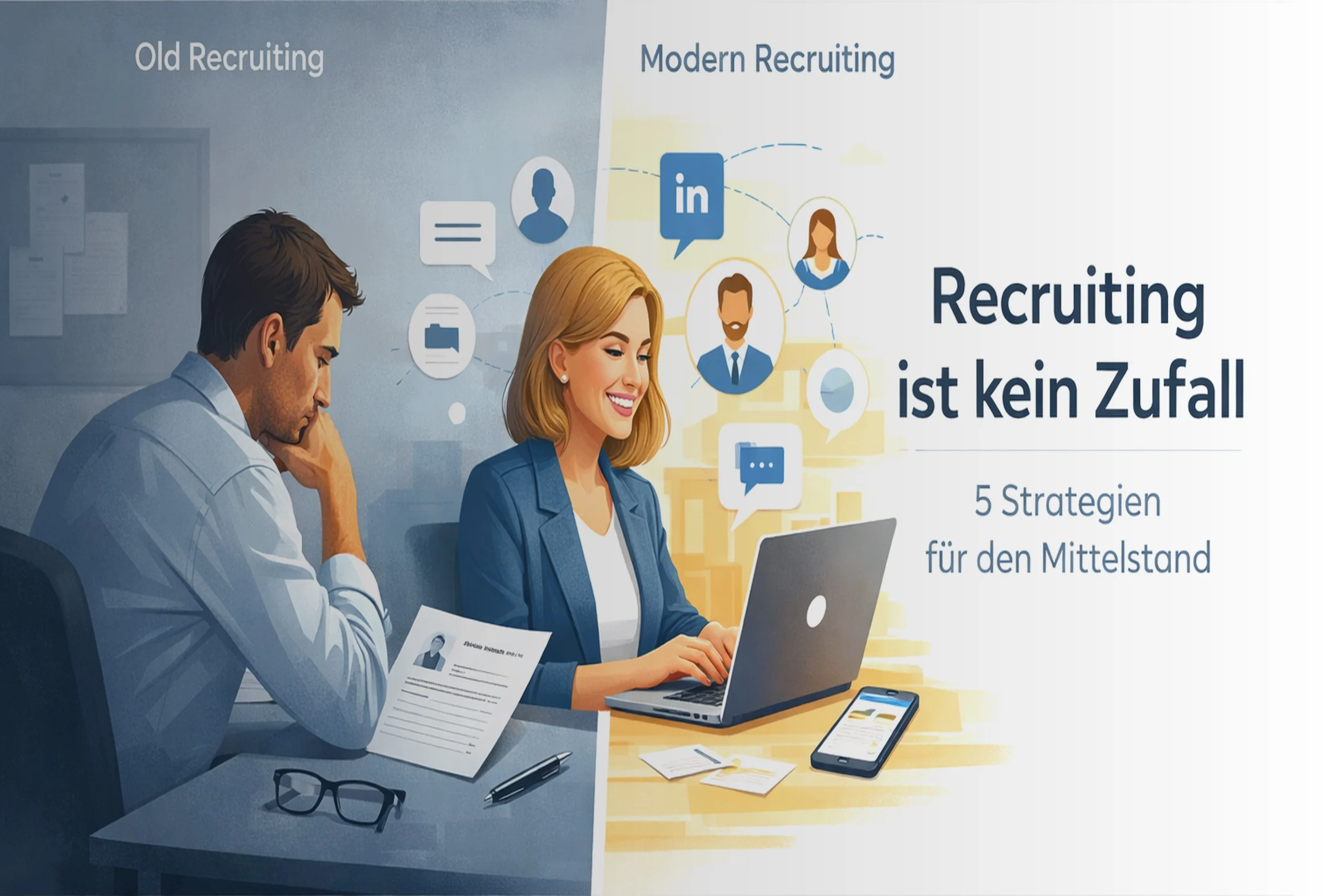
Despite the current economic slowdown in Germany, the skills shortage remains a reality for many mid-sized companies (the German Mittelstand). At the same time, recruiting in practice is often still done the way it was in the early 2000s: post a job advert, wait – and hope.
But it is precisely this approach that is one of the main reasons why positions stay unfilled for unnecessarily long.
Anyone who wants to hold their own in the competition for qualified professionals needs to think about recruiting in a modern way: strategically, proactively and consistently from the candidate’s point of view. We show five critical success factors that mid-sized companies can use to make their search for staff more successful in the long term.
1. Recruiting starts with the right mindset
Successful recruiting is not a matter of chance – it is the result of clear strategic decisions. Companies that recruit successfully today do not regard recruiting as an administrative task but as a core management responsibility.
In practical terms, this means:
- Recruiting is approached much like sales
- Candidates are treated like demanding customers
- Positions are actively “sold” – not just advertised
At the same time, it is crucial to define a realistic candidate profile. The “perfect candidate” rarely exists. What matters is the combination of professional suitability and personal fit.
2. A clear position as an employer
Mid-sized companies in particular often have great strengths – but do not communicate them clearly enough. Stock phrases such as “flat hierarchies” or “good working atmosphere” are no longer enough today.
The key question is: why should candidates choose your company – and not your competitor?
Important success factors:
- Authentic insights into everyday work and responsibilities
- Clear communication of development opportunities
- Visibility of managers and employees
- An honest account of current and future challenges
Authenticity beats gloss. Those who convey a realistic picture reduce mis-hires and increase employee retention.
3. The application process as a critical success factor
A common but underestimated reason for unfilled positions is an inefficient application process. Top candidates decide quickly – and drop out just as quickly.
That is why the following applies:
- Simplicity: short application routes instead of complex forms
- Speed: responses within 24–48 hours
- Transparency: clear communication about the process and the next steps
Companies should be aware that the application process is now a key part of the candidate experience – and therefore a decisive competitive factor.
4. Active outreach instead of passive waiting
The days when highly qualified candidates actively respond to job adverts are largely over – despite the currently higher unemployment.
Successful recruiting therefore means: actively approaching talent!
This includes, among other things:
- Direct outreach via relevant business networks such as LinkedIn and Xing
- Targeted social media campaigns
- Use of employee referrals
Important here: standardised messages do not work. An individual, appreciative approach is the key to successful contact.
5. Rethinking the job interview for today
The classic job interview as an “exam situation” has long been outdated. Modern interviews are:
- dialogue-oriented
- respectful
- on an equal footing
Successful companies pay particular attention to cultural fit, the candidate’s motivation and long-term development prospects. Gaps in skills can usually be closed – an unsuitable team constellation rarely can.
Conclusion: recruiting is not a coincidence – it is the result of a clear strategy
Companies that approach recruiting strategically, actively reach out to candidates and consistently optimise their processes still have very good chances of winning the best-fitting talent today.
It is worth noting that the work is not done once the contract is signed. The phase between signing the contract and the first day at work is especially critical. Professional onboarding significantly reduces drop-out rates and ensures a successful start.
Successful companies:
- actively stay in touch with the new employee
- prepare the first day at work in a structured way
- integrate new colleagues into the team early on
How we can support you
As a specialised partner for filling demanding specialist and executive positions, we help mid-sized companies implement exactly these strategies successfully.
Get in touch if you would like to reorient your search for staff.