8 min read
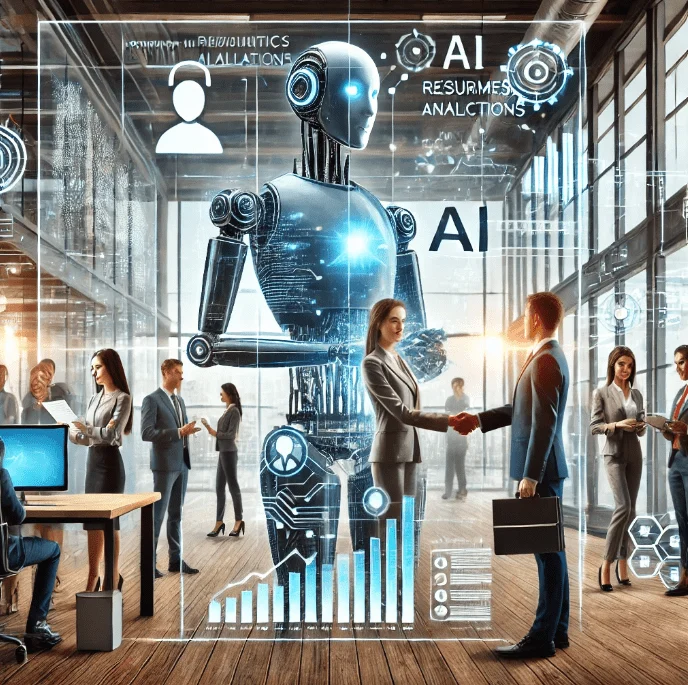
The skills shortage in Germany: how AI in recruiting can help
Although the German labour market is going through a slight slowdown this year, the fundamental challenge remains unchanged: the skills shortage in Germany will increase dramatically in the coming years.
Depending on the scenario, Germany could lose seven million skilled workers by 2035, as the baby boomers retire and the generations that follow, Generation Z and Generation Alpha, are not producing enough skilled workers to replace them.
This development presents companies with an enormous challenge: how can they continue to attract and retain the best talent in an ever more competitive market, and so secure the company's survival?
Artificial intelligence (AI) in recruiting offers a promising solution. AI technologies can make recruiting processes not only more efficient and cost-effective, but also better in quality.
Why AI in recruiting is becoming indispensable
Progressive digitalisation has already brought about profound change in numerous industries, and the HR sector is no exception. Artificial intelligence makes it possible to analyse large and complex volumes of data in a very short time, a decisive advantage in recruiting, where speed is an important success factor.
Artificial intelligence can thus help HR decision-makers process information about applicants more quickly, leading to more efficient and better-informed decisions. This saves time and resources, shortens the time to fill a position and increases the likelihood of finding the ideal candidate.
The use of artificial intelligence in recruiting is also linked to the expectation of greater objectivity in the selection process, provided that the AI has been trained without bias. Human errors of judgement, such as the (un)conscious selection of familiar or similar candidate profiles, or unconscious prejudice, are eliminated, leading to fairer selection decisions.
Applicants, too, benefit in many ways from the integration of artificial intelligence into the recruiting process. One of the most significant advantages is an improved candidate experience. Personalised communication, automated follow-ups and intelligent matching algorithms ensure a smooth and engaging application experience. This in turn increases the satisfaction and commitment of potential candidates.
Typical use cases of AI in recruiting
Optimising recruiting strategies with predictive analytics
Predictive analytics is the use of data to forecast future trends or identify patterns. In recruiting, for example, comparing past applicant numbers with labour market data is an insightful source of information for forecasting future trends. This helps companies make data-driven recruiting decisions and so improve the quality of their recruiting strategies.
Creating and posting job advertisements
AI tools for job posting streamline the creation and publication of job advertisements. Audience-optimised language and candidate-relevant content, such as highlighting the most important benefits, combined with placement exclusively in media relevant to the target group, increase reach and improve the visibility of employers who are hiring.
Extended candidate search with deep learning
Technologies based on deep learning can go far beyond manual search methods by analysing candidate profiles from various online sources at the same time, such as social media, online job boards and other databases. This enables faster and more comprehensive identification of suitable candidates. Combined with automated and personalised initial outreach, valuable time and resources can be saved.
AI-supported pre-selection of candidates
Another use case for artificial intelligence in recruiting is the automated pre-selection of applicants. Systems such as résumé parsing use AI to scan CVs and capture relevant information such as education, professional experience and skills. This data is then matched against the requirements of the position, so that a candidate's suitability can be assessed quickly.
Improving the candidate experience with chatbots
AI-based chatbots can interact with applicants around the clock, answer questions and collect information. These tools not only improve the candidate experience through instant feedback, but also relieve the recruiting team by answering frequently asked questions automatically.
AI-supported video interviews:
AI-supported video interviewing tools make it possible to conduct interviews efficiently and flexibly in terms of time. Their algorithms also allow candidates' answers, facial expressions, gestures, voice and more to be analysed and evaluated. At the end of the interview, scores are awarded, for example for the "soft skills" measured, such as communication ability, team spirit or initiative.
Dynamic talent pools
Artificial intelligence can also be used to build dynamic talent pools in which candidate profiles are continuously updated and assessed. Such systems can match current market trends against internal company circumstances, taking into account the development of required key skills, so that the best-fitting candidates are always on hand for future vacancies.
ChatGPT in recruiting as a specific use case
A specific use case of artificial intelligence in recruiting is ChatGPT, a chatbot from the US company OpenAI that was made publicly available in November 2022. It makes it easy to interact with AI in a chat format and so benefit from its advantages.
Unlike the tools mentioned above, this publicly accessible and user-friendly application can be used immediately, provided its use is permitted in the company, and does not first have to be laboriously integrated into the existing IT landscape or installed.
The possible applications are varied and lie above all in writing and optimising texts, but also in developing concepts.
ChatGPT can help develop a new recruiting strategy and can be used to create job profiles and the job advertisements derived from them. It can analyse the texts on a company's own careers website and suggest optimised wording, or be used to draw up interview guides. This too helps companies save valuable time and resources.
Particular caution is required, however, when it comes to data protection and confidentiality. ChatGPT should never be used to analyse personal data or confidential company information. It is therefore essential to train employees before ChatGPT is used in the company and to develop clear rules for its use.
Risks of AI in recruiting
The use of artificial intelligence in recruiting offers many advantages, but it also carries some risks that companies must observe and manage carefully. The most important risks include:
Bias and discrimination
AI systems learn from historical data, and if that data is biased, the decisions made by the AI may be biased too. This can lead to unintended discrimination, for example with regard to gender, age, ethnic origin or other demographic characteristics. For instance, an AI trained on data showing an underrepresentation of women in technical professions might tend to favour male applicants for such positions.
Transparency and traceability
AI systems, especially those based on complex algorithms and deep learning, can become increasingly opaque in the course of use, a phenomenon often referred to as a "black box". This makes it difficult to understand the AI's decision-making processes after the fact, which can be problematic for decisions that affect careers.
Data protection and data security
The use of AI in recruiting also involves handling sensitive personal data. Data breaches or misuse of this data can have serious consequences. Companies must therefore ensure that the AI systems they use comply with data protection regulations and that data is stored and processed securely.
Regulatory compliance
To use artificial intelligence in a legally compliant way for hiring, companies should also familiarise themselves with the requirements of the Artificial Intelligence Act (AI Act). The AI law proposed by the European Union aims to regulate the use of AI systems in order to ensure that these technologies are used in an ethical and responsible manner.
For recruiting, this means that companies using AI must meet strict compliance requirements. They must be able to demonstrate that their algorithms do not make discriminatory decisions and that decision-making processes are transparent to the supervisory authorities. Complying with these regulations involves additional effort.
Conclusion: the role of artificial intelligence in modern recruiting
In view of the growing skills shortage in Germany and the intensifying battle for the best minds, the use of artificial intelligence in recruiting is increasingly becoming a strategic necessity. AI technologies, as presented here, offer a range of solutions for making the recruiting process more efficient, more effective and more objective.
Efficiency gains through automation
AI makes it possible to automate time-consuming tasks such as CV screening, the pre-selection of candidates and initial communication with applicants. Tools such as chatbots and AI-supported video interviews reduce the administrative workload for recruiters and enable a faster response to applicants, which is especially crucial in a labour market shaped by skills shortages.
Improving the candidate experience
The personalisation and constant availability that AI makes possible increase candidates' satisfaction and commitment. Applicants appreciate the fast and relevant interactions that automated systems provide. These systems also have the advantage of being available around the clock, and can therefore respond to the needs of candidates in different time zones.
Higher quality and fairness in the selection process
Artificial intelligence (AI) can also significantly improve the quality and fairness of the recruiting process by enabling a standardised assessment of all candidates and reducing human bias. By using algorithms programmed to detect and mitigate bias, AI can help to make fairer selection decisions. AI systems can also analyse large volumes of data to gain more comprehensive insights into applicants' abilities and thus support more objective selection decisions.
Risks and challenges
Despite the advantages, the use of AI in recruiting also carries risks. Bias in the training data can lead to discrimination, which underlines the need for careful monitoring and adjustment of AI systems. Data protection remains a critical issue, as handling sensitive personal data demands particular care. And complying with the new EU AI Act requires precise knowledge of the regulatory requirements.
In summary, the use of AI in recruiting is not only an answer to the skills shortage, but an indispensable investment in the future of personnel recruitment.